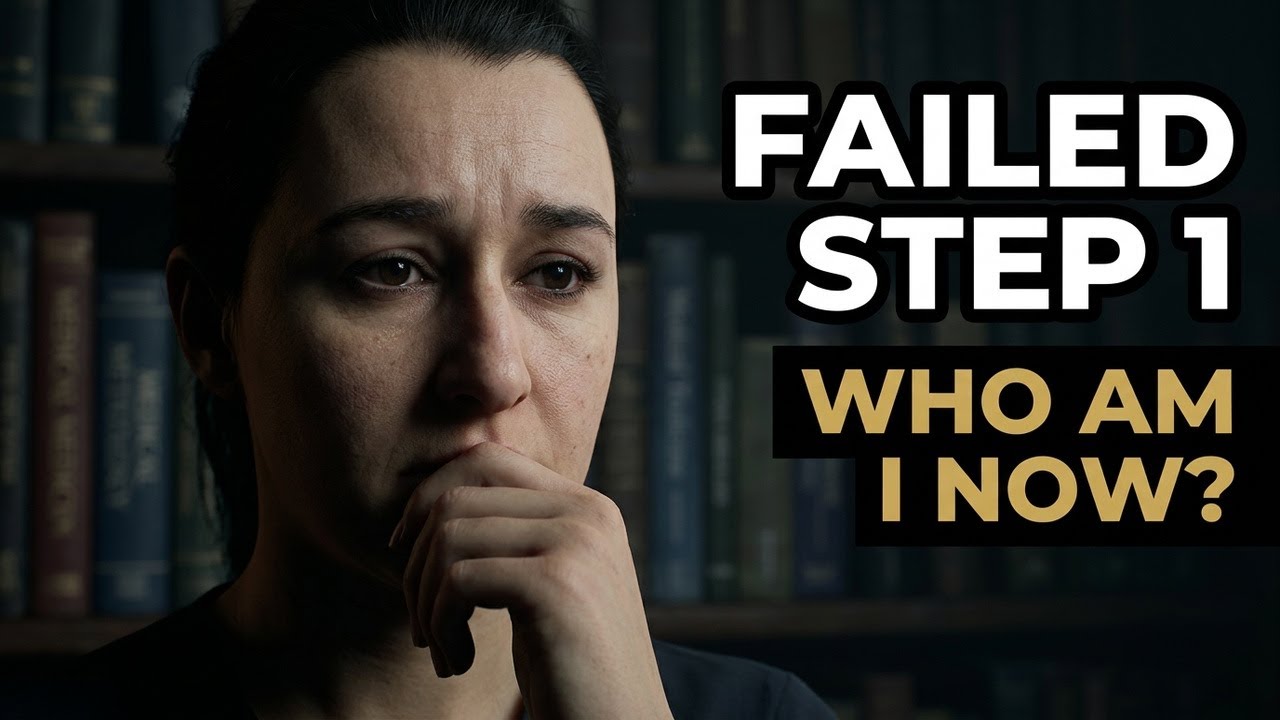
How Failure, Trauma, and Struggle Can Shape Your Identity
Podcast: "Life as a Patient-Doctor"
Listen on Spotify and Apple Podcasts
See the bottom of this blog post for related posts and resources.
Why Do People Hide Their Struggles and Failures?
The fear of failure—and actually experiencing failure—are deeply stigmatized in our society.
People often do not share their struggles because of shame, but also because they fear that those experiences will change how the world sees them.
Let me be honest:
Sharing your struggles probably WILL change how some people see you.
It may even change how you see yourself.
But that change does not have to be negative.
Our Stories Include Both Accomplishments and Failures
Our life's story is made up of accomplishments, failures, relationships, challenges, choices, losses, opportunities, and everything that happens in between.
Our identity is partly how we understand our place within that story and within our communities.
Yes, every choice can affect our immediate and distant future.
But just because your path changes does not mean that change has to tear you down.
Sometimes I wonder:
What would life be like if everything went exactly as planned?
No bumps in the road.
No unexpected failures.
No surprises.
We might be less stressed.
But would we necessarily be more fulfilled?
Separating My Failures From My Identity
For me, 2022 became a year of trying to separate my pain, mistakes, and failures from my identity.
From the moment I decided to take a Leave of Absence from medical school, challenges seemed to continuously appear.
At times, I felt like I was being chased down a mountain by a giant boulder while simultaneously tripping over rocks and crashing into trees.
Every time I got back up, something else seemed to happen.
I repeatedly had to decide:
Do I let the boulder conquer me?
Or do I keep going?
When the Struggles Kept Coming
During that period, I experienced financial devastation, mental-health challenges, physical-health struggles, uncertainty about medical school, and the possibility of losing my opportunity to become a physician after failing my board exam twice.
The struggles seemed endless.
And eventually, it became difficult to separate what was HAPPENING to me from who I believed I WAS.
Was I someone experiencing failure?
Or was I a failure?
That distinction became incredibly important.
Why I Started Sharing My Story
I eventually chose to share my experiences because I knew I could not possibly be the only person struggling.
Other people had to be experiencing similar challenges.
But many were suffering silently because shame and fear made it difficult to speak openly.
People were afraid of being judged, ostracized, or viewed as incapable.
I understood that fear because I felt it too.
Discovering I Wasn't the Only Medical Student on Leave
When I first shared that I was taking a Leave of Absence from medical school, I learned that approximately five other students in my class were experiencing something similar.
That number gradually grew.
Eventually, we created a group chat for students who had taken or were currently taking time away from medical school.
What connected us was not necessarily WHY we took leave.
The circumstances were different.
But many of us had experienced shame, anger, sadness, loneliness, uncertainty, and fear about what the leave meant for our futures.
Creating a Community Out of Something We Were Hiding
Over time, that group became much more than a place to talk about school policies.
It became a community of support, hope, and healing.
Eventually, the group grew to include more than 20 students across different academic years who were currently taking or had previously taken time away.
The experience taught me something important:
Sometimes the thing you are most ashamed to talk about is exactly the thing connecting you to someone else.
The Power of Support Groups
Having a community of people experiencing similar struggles can dramatically change how someone understands their self-worth and identity.
Support groups are something we commonly recommend in medicine.
We encourage patients experiencing cancer, chronic illness, infertility, grief, addiction, trauma, mental illness, and other challenges to connect with people who understand what they are going through.
Yet medical students and physicians are often reluctant to do the same thing for ourselves.
Why Medicine Can Make Vulnerability Difficult
Medical education has historically emphasized objectivity, emotional control, endurance, and stoicism.
We are taught to prioritize facts, physiology, pathology, diagnosis, and treatment.
There can be an implicit message that an exceptional physician should remain composed regardless of what is happening around—or within—them.
As a result, pain, illness, emotional distress, disability, and failure may be interpreted as weaknesses rather than normal parts of being human.
And when everyone is trying to appear okay, nobody realizes how many people are struggling.
Hiding My Own Medical and Mental Health Conditions
When I learned during medical school that I had endometriosis and generalized anxiety, I initially did not want to make a big deal about either diagnosis.
I worried that acknowledging them would make other people question whether I was capable of becoming a physician.
I did not want my medical conditions to become the first thing someone thought about when they saw me.
So I tried to keep them separate from my professional identity.
Finding Other Healthcare Professionals Who Shared Their Stories
Eventually, social media introduced me to physicians, medical students, and other healthcare professionals who openly advocated around medical conditions they personally experienced.
Suddenly, I realized:
I wasn't the only one.
These people were physicians AND patients.
They could experience illness and still be excellent clinicians.
They could discuss disability without allowing disability to erase their professional identity.
Seeing those examples helped me begin viewing my own experiences differently.
Instead of seeing chronic illness only as something I needed to hide, I started understanding how those experiences could also shape my advocacy, empathy, and perspective.
A Diagnosis Can Be Part of Your Identity Without Becoming Your Entire Identity
I gradually became more comfortable accepting my health conditions as parts of my identity.
But there is an important distinction.
My identity is MORE than my physical illness.
It is more than my mental-health diagnoses.
It is more than my failures.
And it is more than my accomplishments.
These experiences are pieces of a much larger story.
Every new challenge can teach me something that I may later use when facing another obstacle.
That is one way I have come to understand resilience.
We Naturally Put People Into Boxes
From the outside, it is incredibly easy to categorize people based on a few visible experiences.
Successful.
Failure.
Doctor.
Patient.
Disabled.
Healthy.
Strong.
Weak.
Medical student.
Dropout.
Advocate.
But human beings are much more complicated than those categories.
Our brains naturally use labels and categories as shortcuts for understanding the world.
That does not mean we need to reduce ourselves to those same boxes.
Your Identity Can Hold Contradictions
You can be successful AND have failed.
You can be a physician AND a patient.
You can be resilient AND exhausted.
You can be confident AND anxious.
You can be accomplished AND still need help.
You can love medicine AND sometimes question whether you want to continue.
One identity does not erase another.
Losing My Medical Student Identity During Leave
I struggled tremendously with identity during my Leave of Absence.
Medical school had become such a large part of how I understood myself.
Then suddenly, I wasn't attending classes.
I wasn't moving through clerkships with my classmates.
I wasn't following the timeline I had spent years imagining.
So I started asking:
Who am I if I am not actively functioning as a medical student?
Trying to Find Work During My Leave of Absence
During my LOA, I updated my résumé and applied to more than 50 jobs similar to work I had done during college and my gap years.
I applied for positions involving tutoring, nannying, caregiving, fitness instruction, social services, and other work.
Many employers never responded.
Some said I was overqualified.
Some could only offer minimum wage.
Others did not want someone who might eventually return to medical school.
After years of education and developing new skills, I suddenly felt like I had no professional place.
Feeling Devalued Outside of Medicine
The job-search experience intensified the identity crisis I was already experiencing.
I began questioning skills I had spent years building.
Was I employable?
Was I still a medical student?
What did I actually have to offer?
When one of your primary identities disappears, even temporarily, it can be surprising how quickly your confidence in every other part of yourself begins to shift.
Finding Purpose Through Trauma-Informed Movement
Eventually, I found a job working as a fitness instructor and community partner liaison for an organization providing fitness classes to underserved communities throughout Chicago.
That opportunity became an unexpected part of rebuilding my identity.
One of the trauma-informed movement classes I taught was for a group of high-school students on Chicago's South Side.
During one of our first classes, I asked the students to write different aspects of their identities on a whiteboard.
Asking Teenagers: Who Are You?
Initially, they wrote the obvious categories:
Gender, race, grade level.
But with encouragement, the list became much more interesting.
They began including sexual orientation, mental-health experiences, family roles, relationships, interests, responsibilities, and other parts of themselves.
These young people were actively deciding which identities felt meaningful to them.
They were exploring who they were rather than simply accepting the identities society expected them to occupy.
Watching them made me think about my own identity.
Q: Who Was I Without Medical School?
At that point, I was still struggling with the same question.
Was I a fitness instructor?
A mentor?
A writer?
A social-media advocate?
Was I still a medical student?
Who exactly was I?
The boxes I had previously constructed for myself suddenly felt incredibly restrictive.
And many of them seemed to be falling apart.
For a while, I felt emotionally barren and incredibly alone.
Writing Became Part of My Resilience
Throughout that year, writing and journaling became important outlets.
I wrote about failure.
I wrote about medical school.
I wrote about trauma.
I wrote about disability.
I wrote about financial struggles.
I wrote about identity.
Sometimes I shared those reflections with the community that had chosen to support me.
And slowly, my understanding of myself began to change.
My Identity Shifted From "Washout" to Advocate
At one point, I saw myself as someone who had washed out of the path I was supposed to follow.
Eventually, I began to recognize another identity:
Advocate.
And later:
Activist.
I realized that even though I was temporarily away from medical school, I still had something meaningful to contribute.
My experiences gave me a perspective.
My writing gave me a voice.
And being a medical student gave that voice a platform I had not previously possessed.
Failure Can Change Your Identity
Failure can absolutely change how you see yourself.
But that change does not have to mean:
"I'm less worthy now."
It can also mean:
"I understand myself differently now."
"I know what I value."
"I know what I can survive."
"I understand other people's struggles differently."
"I know when to ask for help."
"I know how to advocate."
"I have found people who understand me."
That is still change.
But it is not destruction.
Q: Does Failure Have to Become Part of Your Identity?
No.
But you also do not have to pretend it never happened.
There is a difference between allowing failure to become your entire identity and allowing an experience of failure to become part of your story.
I failed an exam.
That is something that happened to me.
It does not mean:
I am a failure.
Sharing Struggles Can Build Resilience
Sharing your struggles will not always produce a positive reaction.
Some people may judge you.
Some may misunderstand you.
Some may view you differently.
But openness can also create something you never expected:
Community.
The moment one person says:
"Me too."
the experience becomes less isolating.
That connection can become a source of resilience.
What Resilience Means to Me
I do not think resilience means never struggling.
I do not think it means ignoring pain or immediately "bouncing back."
For me, resilience has meant continuing to rebuild after something changes.
Sometimes resilience has looked like persistence.
Sometimes it has looked like asking for help.
Sometimes it has looked like taking a Leave of Absence.
Sometimes it has looked like therapy.
Sometimes it has looked like finding a new community.
Sometimes it has simply meant admitting:
"I'm not okay right now."
You Are More Than the Worst Thing That Has Happened to You
Your failures matter.
Your accomplishments matter.
Your diagnoses matter.
Your relationships matter.
Your trauma matters.
Your community matters.
But none of those things individually contains the entirety of who you are.
Identity is constantly developing.
We gain new roles.
We lose old ones.
We understand previous experiences differently as we grow.
Sometimes the identity you thought you lost makes space for something you never expected to discover.
Final Thoughts
Sharing our struggles can change how other people see us.
It can also change how we see ourselves.
But vulnerability does not automatically create weakness.
Sometimes talking openly about trauma, pain, illness, disability, and failure allows us to transform experiences that once produced shame into sources of connection and advocacy.
My own identity changed repeatedly during my Leave of Absence.
I went from believing I had failed at the only thing that mattered to recognizing that I was still a student, teacher, writer, mentor, advocate, patient, partner, community member, and future physician.
I was never only one thing.
Neither are you.
Our identities are built from both triumph and struggle.
And sometimes the experiences we most desperately want to erase become the experiences that teach us the most about who we are.
Related Blog Posts & Resources
Lessons Learned From Failing USMLE Step 1, Surviving the Six Taboos of Medical School, Navigating Suicidal Ideation, Talking About Failure in Residency Applications, Deciding Whether to Take a Leave of Absence From Medical School, Personal Experiences With ACEs and Mental-Health Challenges
I blog about living as both a patient and a medical doctor.
Check out my Workbook, Residency Application resources, and advising here.
Sign up for my monthly email newsletter to learn when new posts and resources are added.
Related Posts
Guide to Applying for Accommodations for..., Overcoming USMLE Step One Failures to..., Lessons Learned From Failing USMLE Step 1: A...